March 6, 2026
Leverage Is Live on Monarch
Leverage is now available in Monarch for all markets.
This launch includes two execution paths:
- -Swap-based leverage for general collateral/loan pairs
- -ERC4626 vault-token leverage when the collateral vault underlying matches the market loan asset
What this release enables
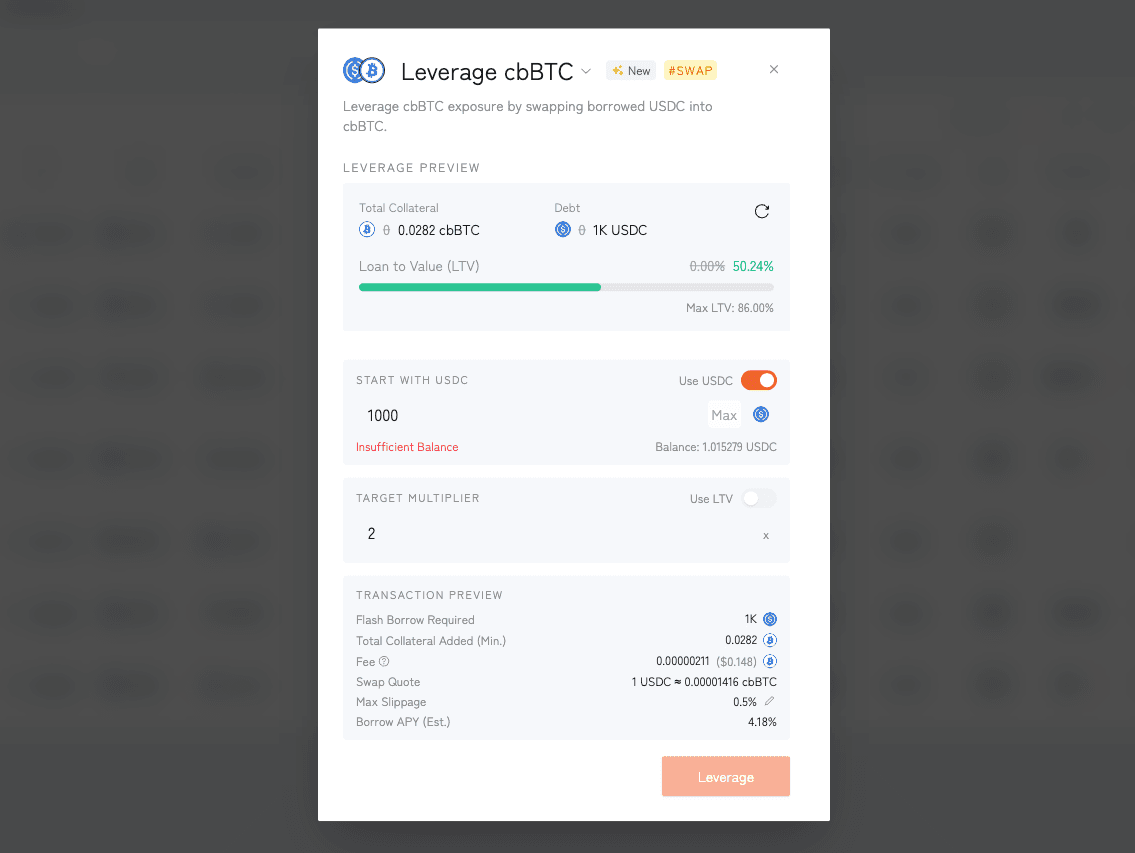
You can open leveraged positions in one bundled transaction flow, start from supported collateral or loan-asset input (depending on route), review projected collateral, borrow amount, and fee before confirming, and use the same interface for leverage and deleverage.
- -Click the market action dropdown from any table, or go to a specific market page and click the Borrow dropdown.
How routing works
When you open leverage, Monarch picks the available route for that market and chain.
- 1.ERC4626 deterministic route: If the collateral token is a vault share token whose underlying is the loan asset, Monarch uses the ERC4626 route.
- 2.Swap-backed route: If that ERC4626 route is not available, Monarch uses a swap route powered by Velora (ParaSwap).
Swap-based leverage (Velora + Bundler3)
For swap routes, the action is executed as one bundled transaction. (You need to sign a one-time authorization for Morpho's official Bundler3 contract if you haven't used it before.)
If you inspect the transaction flow, the core steps are:
- -Move your input into the leverage flow
- -Take a flash loan in the market loan asset
- -Swap loan asset to collateral through Velora
- -Supply collateral to Morpho
- -Borrow loan asset to close the loop and settle the flash loan
- -Apply the displayed fee
All of that happens in one transaction path so you do not have to manually chain steps.
ERC4626 vault-token leverage
For vault-share collateral where the vault underlying equals the market loan asset, Monarch switches to ERC4626 mode automatically. This route use the existing BundlerV2, so no extra authorization is needed for existing users.
That path avoids a DEX swap leg in the leverage loop and uses vault conversion steps instead. In practice, this is the clean route for vault-token-to-underlying pairs. For example, markets like USDC/yoUSD below.
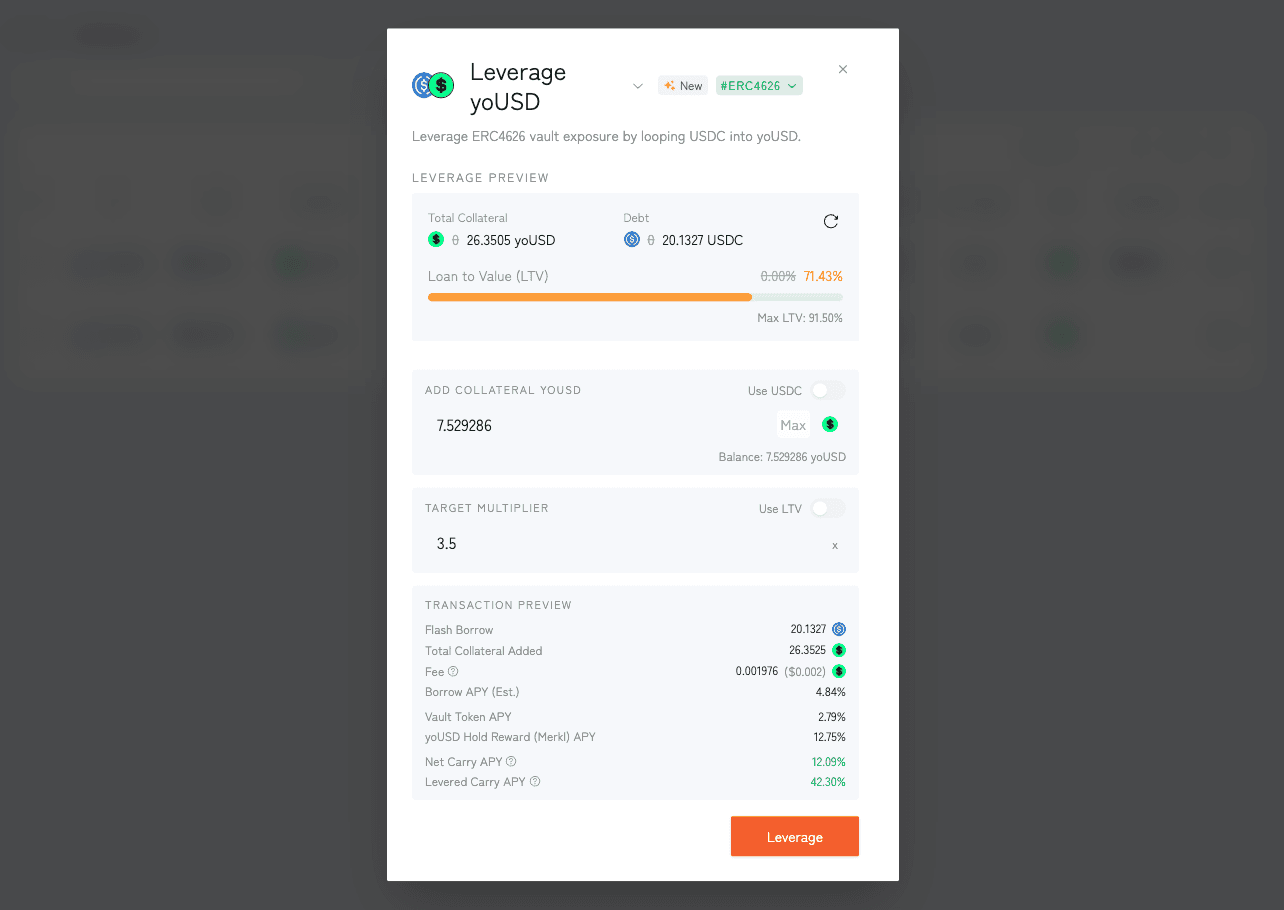
P.S. If you know any active incentive campaign on a vault token like yoUSD above, get in touch so we can support showing this APY on the leverage preview.
Fee model
Current leverage fee is 0.0075% (0.75 bps) of added collateral, capped at $5 per transaction. Fee is shown in preview before execution.
Risk note
Leverage increases liquidation risk as effective LTV rises. Use conservative multipliers and review projected post-action metrics before signing.
Happy looping.